Hannele M. Niemi Calls for Greater Investment in Teacher Preparation as Global Education Faces Mounting Challenges
Education researcher calls for better teacher preparation, classroom conditions and AI-ready learning LOS ANGELES, CA,
Press Release Disclaimer: This is a press release distributed through the XPR Media network. It has not been independently verified by our newsroom.
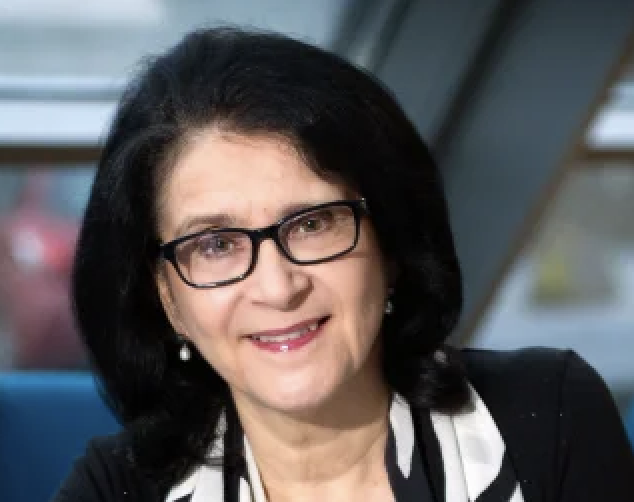

Education researcher calls for better teacher preparation, classroom conditions and AI-ready learning
LOS ANGELES, CA, UNITED STATES, October 12, 2026 /EINPresswire.com/ — As education systems worldwide confront student achievement gaps, teacher shortages and the growing influence of artificial intelligence, Hannele M. Niemi, education advocate and author of “The Teacher’s Role in the Changing Globalizing World: Resources and Challenges Related to the Professional Work of Teaching” is calling for greater investment in teacher preparation and the professional conditions educators need to help students succeed. The education researcher and academic leader argues that the future of education depends not simply on recruiting more teachers, but on equipping them with the expertise to meet the changing needs of learners.
“Improving education must begin with teachers. Technology and artificial intelligence are reshaping our classrooms, but the quality of education still depends on how well teachers are prepared to teach. We must equip educators to foster critical thinking, engage students in meaningful learning and help young people understand not only what they learn, but how and why they learn. Without well-prepared teachers, we cannot achieve the quality and equity in education that every student deserves.”
The scale of the challenge is considerable. Niemi points that the world has 107 million teachers, but it needs another 50 million teachers by 2030 to ensure universal access to pre-primary, primary and secondary education, according to new UNESCO data released on World Teachers’ Day 2026.
“Quality teaching is not simply what a teacher does. It is what a teacher is able to do in a particular context, with particular learners, supported by the conditions of the education system. This connects directly to the global teacher shortage. If societies want quality teaching and learning, they need not only to recruit more teachers, but to create the professional and organizational conditions in which teachers can exercise these capacities,” Niemi explains.
The OECD’s Program for International Student Assessment (PISA) provides important context for this discussion. The assessments examine how well 15-year-old students apply their knowledge and skills in reading, mathematics and science, highlighting questions about how education systems can strengthen learning amid social and technological change.
“The growing availability of artificial intelligence makes the role of teachers more important, not less. Students need guidance to use these technologies responsibly, evaluate the accuracy of their outputs and understand their limitations. AI can support learning, but it must never replace the critical thinking, knowledge and understanding that education is meant to develop. Teachers are essential in helping students become independent, critical thinkers who can navigate an increasingly technology-driven world,” Niemi notes.
Beyond delivering subject content, teachers must help students ask meaningful questions, examine evidence, solve problems and make informed decisions. They also shape classroom environments in which students feel respected, can ask questions without fear and have opportunities to learn through investigation and practice.
For Niemi, addressing the global teacher shortage therefore requires more than increasing recruitment. Teachers need strong professional preparation, ongoing development, appropriate resources and the autonomy to adapt their expertise to different learners and changing circumstances. These conditions are essential to attracting educators to the profession and enabling them to remain in it.
“The challenge is not simply to introduce new technologies or revise educational policies. It is to ensure that teachers are properly prepared to turn these changes into meaningful learning experiences for students. As countries consider international assessment findings and the growing influence of artificial intelligence, investment in teachers must remain at the centre of the conversation. The future of education depends on our ability to equip educators to help children build knowledge, develop independent judgement and prepare for an increasingly complex world,” Niemi concludes.
About Hannele M. Niemi
Hannele M. Niemi is an education researcher and academic leader whose work focuses on educational quality, equity, teacher education and the future of learning. Her work examines how education systems can respond to social and technological change while supporting meaningful learning opportunities for students. She has been associated with the University of Helsinki and the University of the People.
To learn more, please visit: https://www.mv.helsinki.fi/home/hmniemi/biography.htm
University of the People: https://www.uopeople.edu/
Amanda Kent
Boundless Media USA
+1 313-403-5636
Legal Disclaimer:
EIN Presswire provides this news content “as is” without warranty of any kind. We do not accept any responsibility or liability
for the accuracy, content, images, videos, licenses, completeness, legality, or reliability of the information contained in this
article. If you have any complaints or copyright issues related to this article, kindly contact the author above.

Media gallery